Best Mount Cook Helicopter Tours — Quick Picks
Which Mount Cook Helicopter Tour Is Right for You?
| Role | Route | On the ice | Best for | Rating | From | |
|---|---|---|---|---|---|---|
| Best value | Tasman and Hooker valleys | Snow landing | A landing under Aoraki | 4.7★ | $223 | Check → |
| Alternative landing | Alpine circuit | Snow landing | A second departure option | 4.8★ | $285 | Check → |
| Ski plane | Glacier landing by fixed wing | Glacier landing | Landing on skis rather than skids | 4.7★ | $323 | Check → |
| Longest scenic | Across the divide | Landing | West Coast glaciers as well | 5.0★ | $491 | Check → |
| Glacier hike | Tasman Glacier | 3 hours walking | Crampons and a guide on the ice | 4.9★ | $528 | Check → |
Compare Helicopter Tours in Mount Cook
Prices, ratings and availability last checked: September 2026.
 Top Pickfrom $223
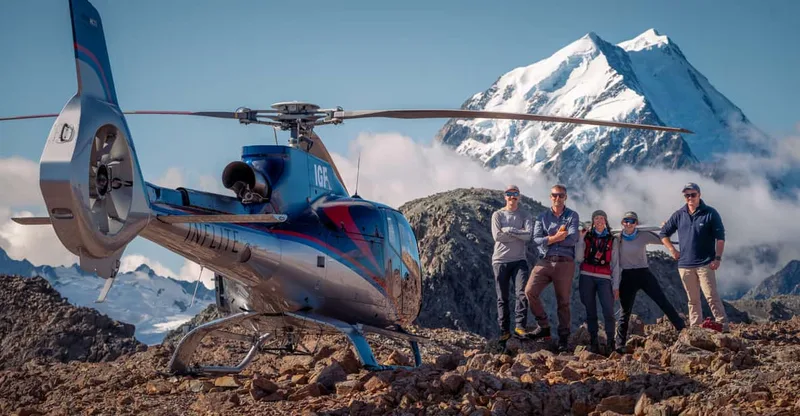
 Scenic Helicopter Flight with Alpine Landing
- Flight areaTasman and Hooker valleys with an alpine landing
- MachineShared cabin
- Best forThe most-booked flight here
- Headsets with pilot commentary provided
- Cancellation terms are shown on the operator's booking page
 from $323
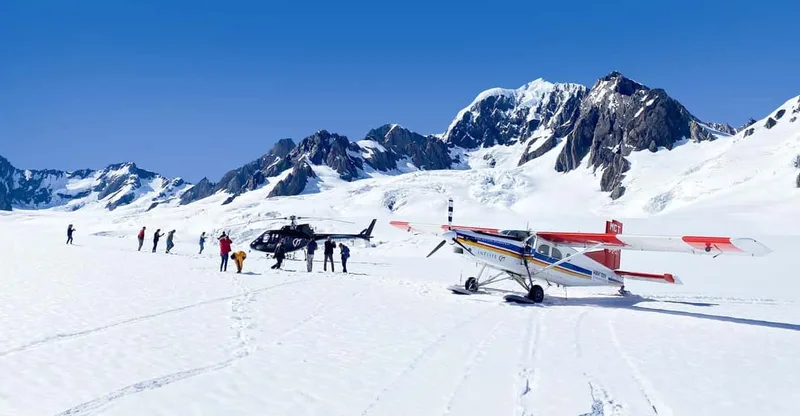
 Ski Plane and Helicopter Glacier Combo Flight
- Flight areaGlacier landing by ski plane, with a helicopter leg
- MachineSki plane and helicopter
- Best forA fixed-wing landing on snow
- Headsets with pilot commentary provided
- Cancellation terms are shown on the operator's booking page
 from $528
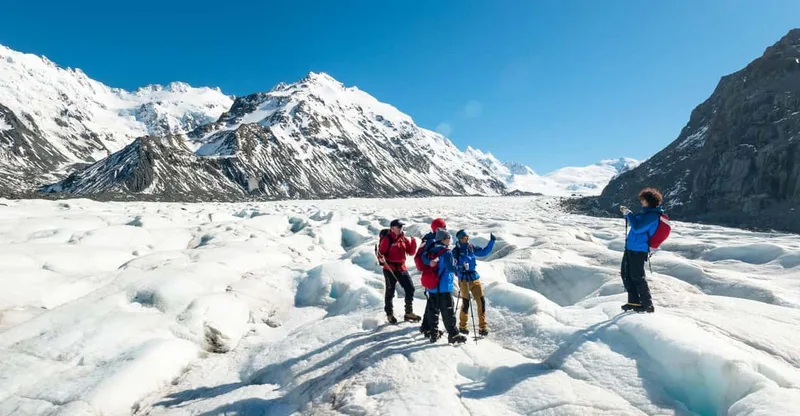
 3-Hour Tasman Glacier Helicopter Ride and Hike
- Flight areaTasman Glacier, three hours with a guided hike
- MachineShared cabin, crampons supplied
- Best forWalking on the ice
- Headsets with pilot commentary provided
- Cancellation terms are shown on the operator's booking page
 from $285
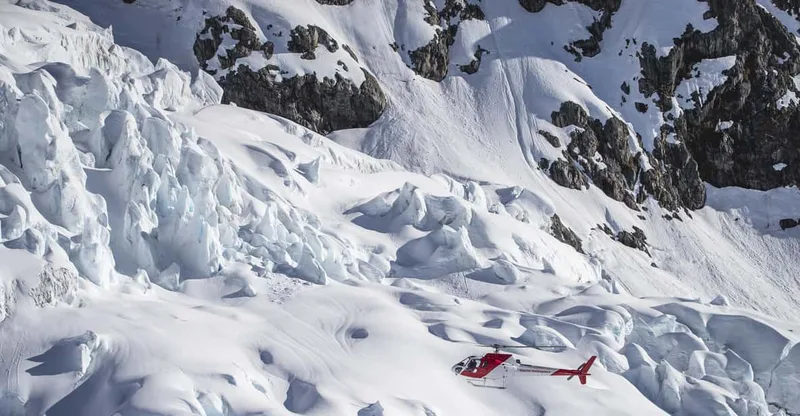
 Helicopter Flight with Alpine Landing
- Flight areaAlpine circuit with a landing
- MachineShared cabin
- Best forAn alternative landing flight
- Headsets with pilot commentary provided
- Cancellation terms are shown on the operator's booking page
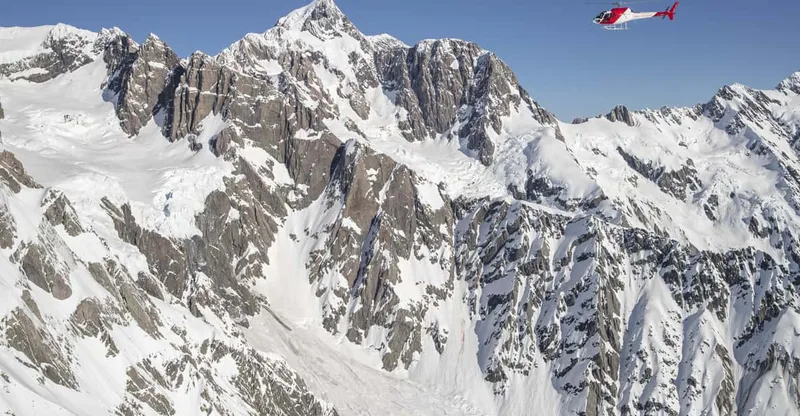 from $385
 Tasman Glacier Helicopter Flight
- Flight areaTasman Glacier route
- MachineShared cabin
- Best forThe full length of the glacier
- Headsets with pilot commentary provided
- Cancellation terms are shown on the operator's booking page
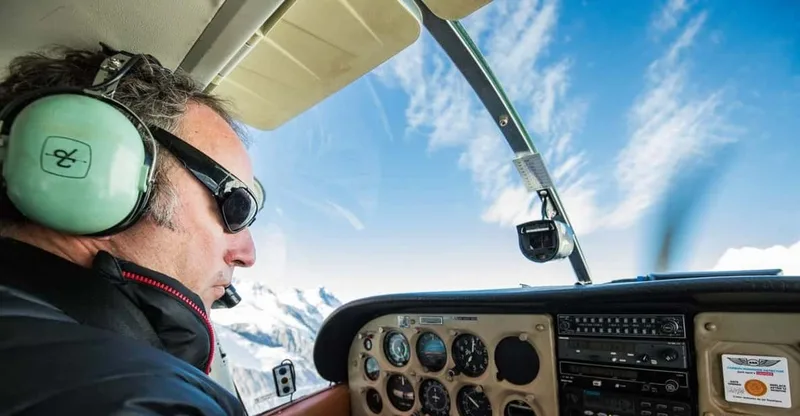 from $440
 Mt Cook: 55-Minute Scenic Flight in Helicopter or Ski Plane
- Flight area55-minute scenic route, helicopter or ski plane
- MachineShared cabin or ski plane
- Best forA long scenic flight
- Headsets with pilot commentary provided
- Cancellation terms are shown on the operator's booking page
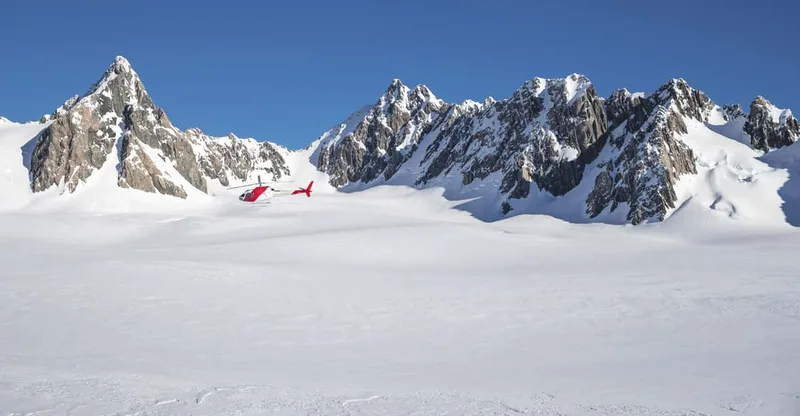 from $491
 Tasman Glacier and West Coast Helicopter Flight
- Flight areaTasman Glacier and across the divide to the West Coast
- MachineShared cabin
- Best forBoth sides of the Alps in one flight
- Headsets with pilot commentary provided
- Cancellation terms are shown on the operator's booking page
How Much Does a Mount Cook Helicopter Tour Cost?
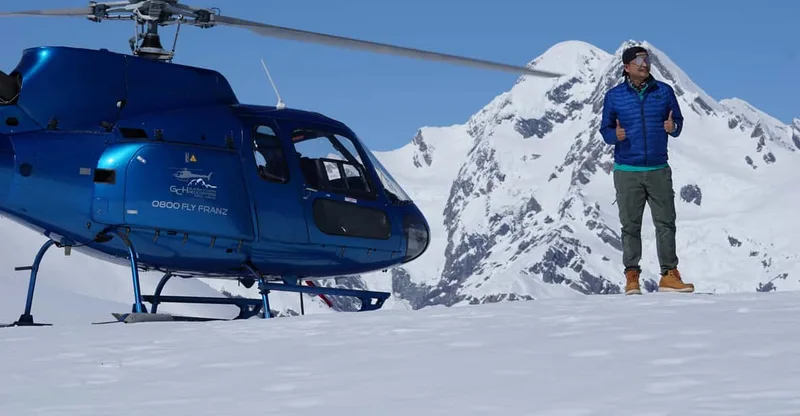
A landing under the highest mountain in the country costs $223, which is remarkable value by any comparison in this guide. Longer routes cross the divide toward the West Coast, and the glacier hike buys three hours on the ice rather than fifteen minutes beside the aircraft.
Twenty-five to thirty-five minutes over the Tasman and Hooker valleys with a landing on a snowfield below the peaks.
A ski-equipped fixed-wing aircraft landing on the glacier, sometimes paired with a helicopter leg, or a longer scenic route.
- Ski Plane and Helicopter Combo · $323
- Tasman Glacier Flight · $385
- 55-Minute Scenic Flight · $440
Across the main divide toward the West Coast glaciers, or three hours walking on the Tasman with a guide.
What affects the price?
A snow landing is ten to fifteen minutes beside the aircraft. The three-hour hike is guided walking on the glacier itself, which is a different kind of day.
Mount Cook is one of the few places where a fixed-wing aircraft lands on the ice, on skis. It is a distinct experience and it costs about $100 more than a basic helicopter landing.
The longest flights cross the main divide toward the West Coast glaciers, which is roughly double the flying of a valley circuit.
The main divide makes its own weather. Cancellations are common and refunded, and morning slots are the reliable ones.
Landing, Ski Plane or Glacier Hike: Which Mount Cook Flight?
Three ways onto the same ice, at three price levels. Fares below come from the flights listed on this page.
| Helicopter landing | Ski-plane combo | Glacier hike | ||
|---|---|---|---|---|
| Typical fare | $223 – $285 | $323 | $528 | |
| How long | 25 – 35 minutes | About an hour | About three hours | |
| On the ice | 10 – 15 minutes | Landing run and time on snow | Guided walking with crampons | |
| Equipment | None needed | None needed | Boots and crampons supplied | |
| Best for | Almost everyone | Something you cannot do elsewhere | Anyone who wants to walk on a glacier |
Month-by-Month Guide
Long daylight, many departures and warm valley weather.
Settled summer conditions and firm snow on the landing sites.
Still air and clear light — often the best month here.
Cool, quiet and stable between autumn fronts.
Shorter days and more frequent weather closures.
Winter cold with deep snow on the tops.
Coldest month; clear windows between systems are spectacular.
Deep snow, short days, fewer daily departures.
Spring improving with longer light and more flights.
Snow still deep up high, valleys greening.
Long days returning and settled weather building.
Peak season begins with maximum daylight.
What to Expect on the Day
Check in at the village or Glentanner
Operators fly from Mount Cook village and from Glentanner, twenty minutes down the lake road.
Read which base your booking uses — the two are not walking distance apart.Weigh-in and kit
Passengers weighed; glacier hikes issue boots and crampons before boarding.
For a plain landing, wear boots with grip — the snow is firm and uneven.Safety briefing
Rotor safety, boarding order and the rules for moving on a snowfield.
Landing sites are at altitude and the air is thin; move deliberately rather than quickly.The flight
Up the Tasman valley over the glacier and its terminal lake, past the Hochstetter icefall and under the summit ridge of Aoraki.
The glacier's grey lower surface surprises people — the clean white ice starts higher up.The landing or hike
Ten to fifteen minutes on the névé, or three hours guided walking on the ice with crampons on the hiking booking.
Weather at 2,000 metres bears no relation to the village; take a proper layer.What to Bring (and What to Leave at Home)
✓ Bring
- Warm layers and gloves — the landing site is well above the village
- Boots with grip; snow is firm and uneven
- Sunglasses, essential against snow glare at altitude
- Sunscreen for high-altitude UV
- Your booking voucher and photo ID
- A camera with a strap
✗ Leave behind
- Loose hats and scarves near the aircraft
- Smooth-soled shoes for a snow landing
- Large bags — cabin storage is minimal
- Drones, prohibited in the national park
- Selfie sticks, banned in the cabin
Where Flights Depart From
| Heliport / Base | Details | Best for |
|---|---|---|
| Mount Cook village | Most flights on this page | Guests staying in the village |
| Glentanner | Some scenic and ski-plane departures | Travellers on the lake road, twenty minutes out |
How to Choose a Helicopter Operator
What good operators do
- Say whether the landing is on the névé or lower on the glacier, and what it is like underfoot.
- Distinguish clearly between a helicopter landing and a ski-plane landing.
- Supply boots and crampons on glacier hikes.
- Publish the second-seat weight threshold — altitude tightens the margins here.
- Refund weather cancellations in full and rebook within the same day where possible.
Red flags to avoid
- Clean white-ice photography on a landing site that is grey moraine ice in late summer.
- No mention of which base a flight departs from.
- Glacier hikes with no stated fitness requirement.
- Photo packages presented as compulsory.
What You Fly Over in Mount Cook
The landmarks and flight corridors these tours actually cross, and what each one looks like from the air.
The Tasman Glacier
Every flightNew Zealand's longest glacier, 23 kilometres of ice ending in a grey meltwater lake with floating bergs.
Aoraki Mount Cook
Every flight3,724 metres, the highest peak in the country, with the Hooker and Tasman valleys either side of its ridge.
The Hochstetter icefall
Glacier routesA tumbling icefall dropping from the upper névé onto the Tasman, broken into seracs.
The main divide and the West Coast
Long flightsThe ridge that splits the island, with the Franz Josef and Fox glaciers falling toward the sea on the far side.
FAQ: Helicopter Tours in Mount Cook
More Helicopter Tours in Australia & New Zealand
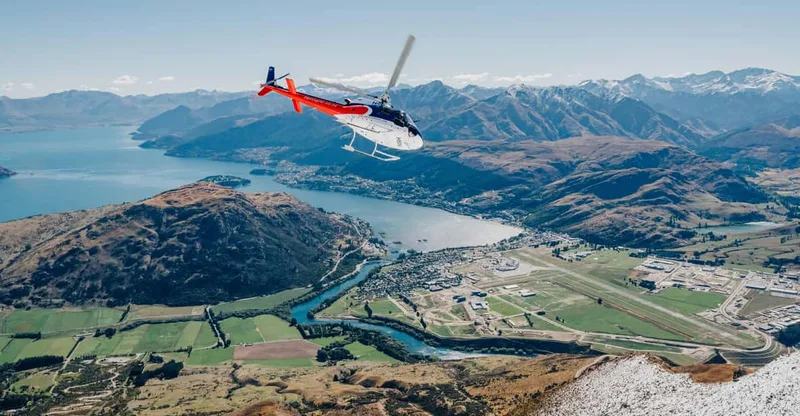
Browse all the best helicopter tours worldwide, from the Grand Canyon to the Southern Alps.
Ready to fly in Mount Cook?
7+ flights compared · rated operators only · instant confirmation